Open Lecture 11 — Non-Terrestrial Networks for 6G: Toward Seamless Network Convergence
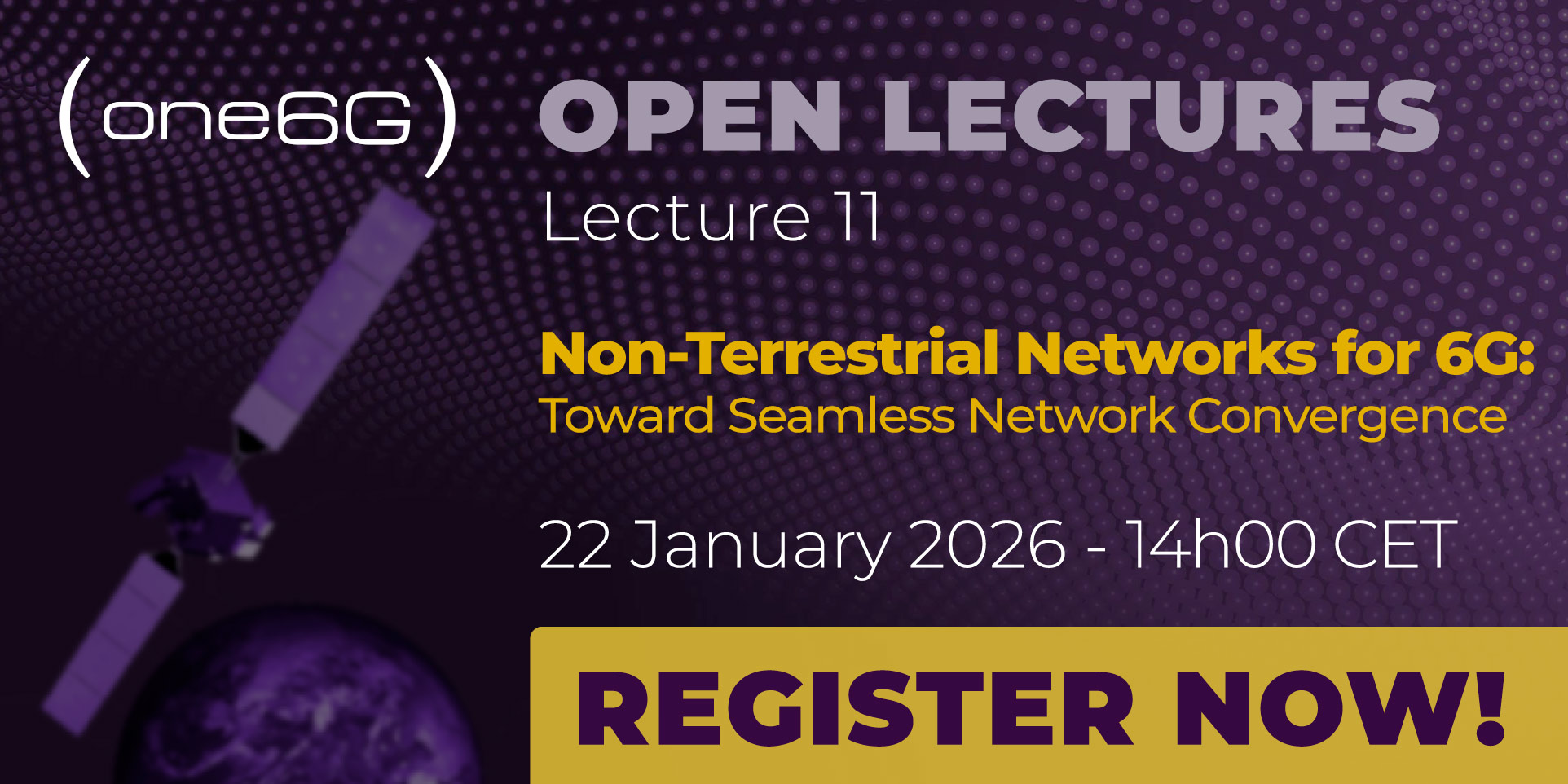
The one6G Open Lectures are coming back! After a short break, the one6G Association is delighted to announce that Open Lecture 11 will take place on January 22, 2026, at 14h00 CET, focusing on one of the most transformative areas of 6G research: Non-Terrestrial Networks (NTNs) and their role in achieving seamless network convergence.

Non-terrestrial networks (NTNs) refer to radio access networks where the access nodes are carried on platforms hovering high above the terrestrial surface – in the air or in space – including high-altitude platforms (HAPs), unmanned aerial vehicles (UAVs), and satellites. While 5G New Radio (NR) was originally designed as a terrestrial network (TN), it has since been extended to support NTN components, expanding coverage for its main services and enabling communication through any network node via the same end device.

The vision for 6G goes far beyond this extension. It envisages a full integration of NTN and TN at the network infrastructure level, leading to true network convergence. In this future, all radio services could be delivered seamlessly through any node (terrestrial or non-terrestrial) and completely transparent to the user. This paradigm promises to finally realize the longstanding goal of ubiquitous, resilient, and borderless connectivity, ensuring service continuity anytime and everywhere – a promise of mobile radio given ever since its previous generations. Integrated NTN–TN architectures also offer various possibilities to advance sustainability goals, facilitated by satellite-based services addressing climate issues, enabling greener communication networks, and helping to reduce the global digital divide.

Moderated by Dr. Malte Schellmann, Principal Research Engineer at Huawei Technologies German Research Center, one6G Open Lecture 11 will explore the technological, architectural, and regulatory aspects of NTN/TN convergence, its challenges, and its potential to close global coverage gaps. The event will feature four distinguished speakers who will share insights into the latest research directions, use cases, and standardization activities paving the way toward fully integrated 6G networks.

Join us on January 22, 2026, at 2 p.m. CET to discover how 6G is extending connectivity beyond the Earth’s surface.

Participation is free, but registration is mandatory. Please click the button below to secure your spot. 

AGENDA

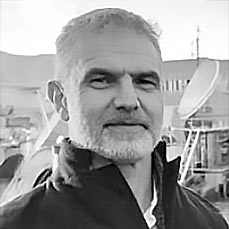
Martin
Martin Schubert  – Moderator

Huawei Technologies

Martin Schubert is a Principal Researcher at Huawei’s Munich Research Center in Germany. He received his doctoral degree (summa cum laude) in electrical engineering from the Technical University of Berlin in 2003. From 2003 to 2012, he was with the Fraunhofer Heinrich Hertz Institute (HHI) where he worked as a senior researcher, lecturer, and team leader. He is a co-author of two books and more than 150 peer-reviewed journal articles and conference papers in the area of signal processing for communications and networking. In 2007 he was a co-recipient of the VDE Johann-Philipp-Reis Award; he also co-authored a 2007 Best Paper Award of the IEEE Signal Processing Society. From 2009 to 2013 he was an Associate Editor of the IEEE Transactions of Signal Processing. Martin is currently leading the Work Item "Next Generation MIMO" of the one6G Association.

14:00 Welcome & opening

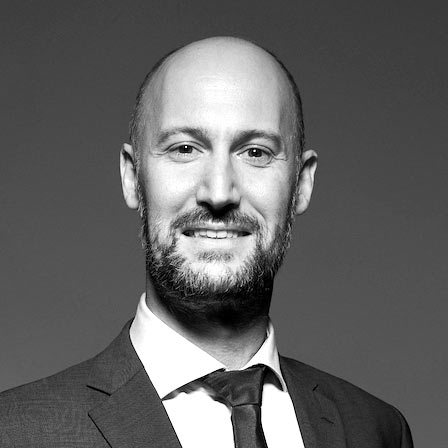
Malte-Schellmann
Malte Schellmann

Principal Research Engineer and the Technology Manager at Huawei Munich Research Center

Bio coming soon...

14:05 Presentation title coming soon

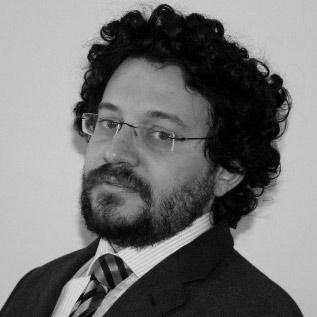
Alessandro
Alessandro Vanelli-Coralli

Professor, University of Bologna & ETH Zürich

Alessandro Vanelli-Coralli received the Dr. Ing. Degree (cum laude) in Electronics Engineering and the Ph.D. in Electronics and Computer Science from the University of Bologna (Italy) in 1991 and 1996, respectively. In 1996, he joined the Department of Electrical, Electronic and Information Engineering - Guglielmo Marconi (formerly Department of Electronics, Computer Science and Systems) at the University of Bologna, where, since 2021, he has been a Full Professor. In 2022, he joined as a Research Fellow the Digital Integrated Circuits and Systems group at ETH Zurich (CH). His research activity focuses on Wireless Communication with specific emphasis on Satellite Communications. He participates in national and international research projects on satellite mobile communication systems serving as Scientific Responsible and Prime Contractor for several European Space Agency and European Commission funded projects. He co-authored more than 180 peer-reviewed papers in scientific journals and conferences, and he is a co-recipient of several Best Paper Awards. He is an IEEE Senior Member and the recipient of the 2019 IEEE Satellite Communications Technical Recognition Award.

14:30 Presentation title coming soon

Symeon Chatzinotas

Professor, University of Luxembourg

Symeon Chatzinotas is currently Full Professor and Chief Scientist and Head of the research group SIGCOM in the Interdisciplinary Centre for Security, Reliability and Trust of the University of Luxembourg. In parallel, he is an Adjunct Professor in the Department of Electronic Systems, Norwegian University of Science and Technology, an Eminent Scholar of the Kyung Hee University, Korea and a Collaborating Scholar of the Institute of Informatics & Telecommunications, National Center for Scientific Research “Demokritos”. In the past, he has been a Visiting Professor at EPFL, Switzerland and University of Parma, Italy and contributed in numerous R&D projects for the Institute of Telematics and Informatics, Center of Research and Technology Hellas and Mobile Communications Research Group, Center of Communication Systems Research, University of Surrey. He has received the M.Eng. in Telecommunications from Aristotle University of Thessaloniki, Greece and the M.Sc. and Ph.D. in Electronic Engineering from University of Surrey, UK in 2003, 2006 and 2009 respectively. He has authored more than 800 technical papers in refereed international journals, conferences and scientific books and has received numerous awards and recognitions, including the IEEE Fellowship and an IEEE Distinguished Contributions Award. He has served in the editorial board of npj Wireless Technology, IEEE Transactions on Communications, IEEE Open Journal of Vehicular Technology and the International Journal of Satellite Communications and Networking. https://sites.google.com/view/symeonchatzinotas

14:55 Presentation title coming soon

tomaso_decola
Tomaso de Cola

Leader of the Integrated Satellite Systems (INS) Group, DLR

Tomaso de Cola received his Master’s Degree and PhD from University of Genoa (Italy) in 2001 and 2010 respectively. From 2002 to 2007, he worked at the Italian Consortium of Telecommunications (CNIT), University of Genoa Research Unit, as scientist researcher. Since 2008, he has been with the German Aerospace Center (DLR), where he has been involved in several projects funded by EU and ESA programs, focusing on different aspects of DVB standards, CCSDS protocols, emergency communications, and testbed design. He is currently leading the integrated satellite systems group at the satellite networks department, as part of the DLR institute of communications and navigation (DLR-KN). He has been taking part in different standardization activities within ETSI, IETF, DVB, and CCSDS, where he currently serves as area director of the Space Internetworking Services (SIS). He has been involved in many projects (co-)funded by European and Italian Space agencies and the European Commission, where he served as project leader, project coordinator, or technical contributor. Finally, he co-authored more than 100 papers. His main research activity concerns TCP/IP protocols, satellite networks, delay tolerant networks, and protocol architectures for space systems.

15:20 Presentation title coming soon
Speaker TBC

15:45   Q&A session and closing remarks

Date

22 Jan 2026

Time

2:00 pm

Location

Virtual event

Start typing and press Enter to search