Open Lecture 12 – Experimental Technologies for 6G: Toward Network Intelligence
Experimental Technologies for 6G: Toward Network Intelligence

The one6G Open Lectures continue their journey into the heart of next-generation connectivity! Following our exploration of Non-Terrestrial Networks, the one6G Association is proud to announce Open Lecture 12, focusing on the critical bridge between theory and reality: Experimental Technologies for 6G.

Bridging the Gap: From Theory to Verification
As the industry pivots from defining 6G visions to developing concrete technical specifications, the focus has shifted toward technology verification. 6G is not merely an evolution of speed; it is the birth of “Network Intelligence,” where the fabric of the network becomes aware of its environment.

Achieving this requires a fundamental shift in how we test and validate radio technologies. From Integrated Sensing and Communication (ISAC) to AI-native air interfaces, the complexity of 6G demands new experimental paradigms. This lecture will dive deep into the current status of these technologies, the architectural challenges of implementing intelligence at the edge, and the rigorous verification processes required to ensure global interoperability.

Key Topics & Insights
Moderated by Josef Eichinger, Chair of one6G WG4 and Head of 6G Research and Prototyping at Huawei Munich Research Center, this session features four distinguished experts who will cover:

  • Game-Engine Fast Ray Tracing: How high-performance gaming engines are being repurposed to create ultra-realistic radio environment maps and references for 6G Sensing.
  • AI-Based Localization & Sensing: Moving beyond data transmission to the “sensing of things,” exploring how AI models identify and track objects with centimeter-level precision.
  • 6G Technology Verification: A candid look at the challenges of validating AI-driven networks and the current status of global prototyping efforts.
  • one6G Endorsed Testbeds: An inside look at the experimental infrastructures and standardized platforms that allow researchers to move 6G from the lab to the field.

Why Attend?
The road to 2030 is paved with experimental data. Whether you are a researcher, a system architect, or a regulatory expert, this lecture provides a front-row seat to the hardware and software breakthroughs that will define the 6G era.


Join us on April 23 at 14h00 CEST to see how we are verifying the technologies that will make the world more programmable, sensed, and connected.

Participation is free, but registration is mandatory.

Moderator

Josef Eichinger – Moderator

Chair, one6G WG4; Head of 6G Research and Prototyping, Huawei Munich Research Center

Josef Eichinger joined Huawei Technologies in 2013 to strengthen the 5G Research team in Munich. He started his professional carrier as technical expert in the field of industry energy and electronic systems. After the study he joined Siemens AG 1994 and was working in development of high frequency radar systems, optical networks and as researcher on radio technologies as HSPA and LTE. He changed to Nokia Siemens Networks 2007 as LTE Product Manager and was head of LTE-Advanced FastTrack Programs until 2012. Currently he is leading research on 5G and 6G enabled industrial communication in Huawei Munich Research Center. The focus are 5G/6G for industry 4.0, vehicle-to-vehicle communication and hospitals. Complementary to the research and standardization he is also responsible for the prove of the new concept by trials and live experiments e.g. Industrial Control in the Cloud, Robot as a Service, Tele-operated Driving, etc. Since April 2018 he is also member of the 5G-ACIA steering board and leading the Huawei delegation. Josef is also founding member of one6g.org and chairing the one6G WG4 Evaluation, Testbeds and Pilots because of his the long expierences with prototypes and test systems.

Speakers

Narcís Cardona

Vice-Chair, one6G; Director, iTEAM, Technical University of Valencia
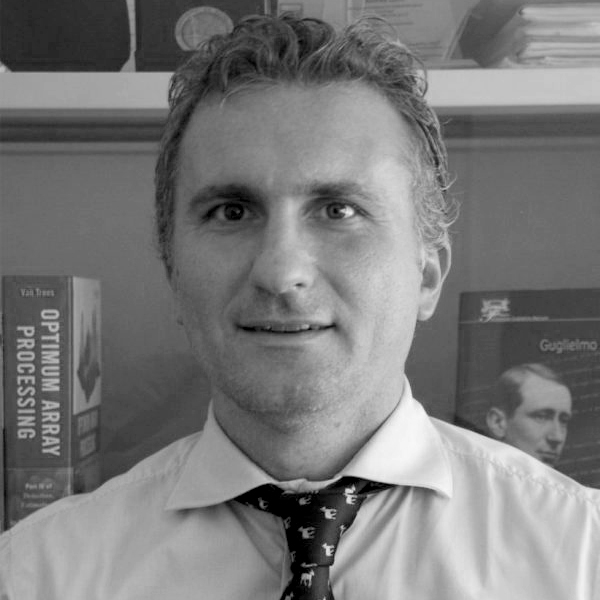
Narcís Cardona is the Director of the Research Institute of Telecommunications and Multimedia Applications (iTEAM) at the Technical University of Valencia (UPV). In 1990, he received his MSc in Communications Engineering from ETSI Telecommunications, Technical University of Catalonia, and in 1995, a PhD in Telecommunications from the Technical University of Valencia. Narcís authored several research books and more than 200 publications in the most relevant international journals and conferences in the field of communications. He holds ten patents. His research interests include mobile channel characterization, broadcast cellular hybrid networks, and body area networks.
Andrea Conti

Founding Director, Wireless Communication and Localization Networks Laboratory, University of Ferrara

Andrea Conti (Fellow, IEEE) is currently a Professor and founding Director of the Wireless Communication and Localization Networks Laboratory, University of Ferrara, Ferrara, Italy. Prior to joining the University of Ferrara, he was with CNIT, and with IEIIT-CNR. In Summer 2001, he was with the Wireless Systems Research Department, AT&T Research Laboratories. Since 2003, he has been a frequent visitor with the Wireless Information and Network Sciences Laboratory, Massachusetts Institute of Technology, Cambridge, MA, USA, where he is currently holds the Research Affiliate appointment. His research interests involve theory and experimentation of wireless communication and localization systems. His current research topics include network localization and navigation, distributed sensing, adaptive diversity communications, and quantum information science. Dr. Conti was an Editor for IEEE journals and chaired international conferences. He was an elected Chair of the IEEE Communications Society’s Radio Communications Technical Committee and is Co-Founder of the IEEE Quantum Communications and Information Technology Emerging Technical Subcommittee. He was the recipient of the HTE Puskás Tivadar Medal, the IEEE Communications Society’s Fred W. Ellersick Prize, and the IEEE Communications Society’s Stephen O. Rice Prize in the field of Communications Theory. He is an elected Fellow of the IEEE and of the IET, and a member of Sigma Xi. He has been selected as an IEEE Distinguished Lecturer.
Andreas J. Kassler

Professor of Computer Science at Deggendorf Institute of Technology 4th TBC

Andreas J. Kassler is Professor of Computer Science at Deggendorf Institute of Technology, Germany (since 2023) and Karlstads Universitet, Karlstad, Sweden (since 2005). From 2003 to 2004, Dr. Andreas J. Kassler was Assistant Professor at the School of Computer Engineering, Nanyang Technological University, Singapore. At Degegndorf, he is leading the Intelligent Network and Systems Lab. He maintains an active research program in the fields of networking and cloud computing with main research focus on Software Defined Networking, Future Internet, Datacenter Networking and, Quality of Service. Dr. Andreas J. Kassler received the Docent title (Habilitation) in Computer Science from Karlstads Universitet in 2007 and the Ph.D. degree in Computer Science from Universität Ulm, Germany, in 2002. He received the M. Sc. degree in Mathematics/Computer Science in 1995 from Universität Augsburg, Germany. He is co-author of around 55 peer reviewed journal articles and book chapters, 195 peer reviewed conference and workshop publications, 7 European or international patents and 11 IETF and ISO standardization contributions. He is also co-editor of a book published in the LNCS book series of Springer. He is the area editor of the Elsevier Computer Networks Journal, served as a guest editor of a feature topic in EURASIP Wireless Communications and Networking Journal, and served as Associate Editor on the editorial boards of some refereed international journals, such as: Journal of Internet Engineering, International Journal On Advances in Networks and Services.

Date

23 Apr 2026

Time

2:00 pm

Location

Virtual event

Start typing and press Enter to search