
one6G special session explores 6G Agentic AI at FCN 2026 in Bologna
On October 29, 2026, one6G hosted a special session titled “6G Agentic AI: Architectures, Protocols, and Foundations for Future Mobile Communication Systems” at the 2026 International Conference on Future Communications and Networks (FCN 2026) in Bologna, Italy. The session brought together experts from academia and industry to discuss two complementary questions: how agentic AI can be built into the design of 6G, and how 6G should be designed to keep pace with rapidly evolving AI.
FCN 2026, the fourth edition of the conference, took place from October 28 to November 1, 2026. It was co-organized by the FuTURE Mobile Communication Forum (China) and the University of Bologna, technically sponsored by the IEEE Communications Society, and supported by one6G. The program included keynote speeches, technical symposia, two workshops, and the “All You Need to Know about” series.
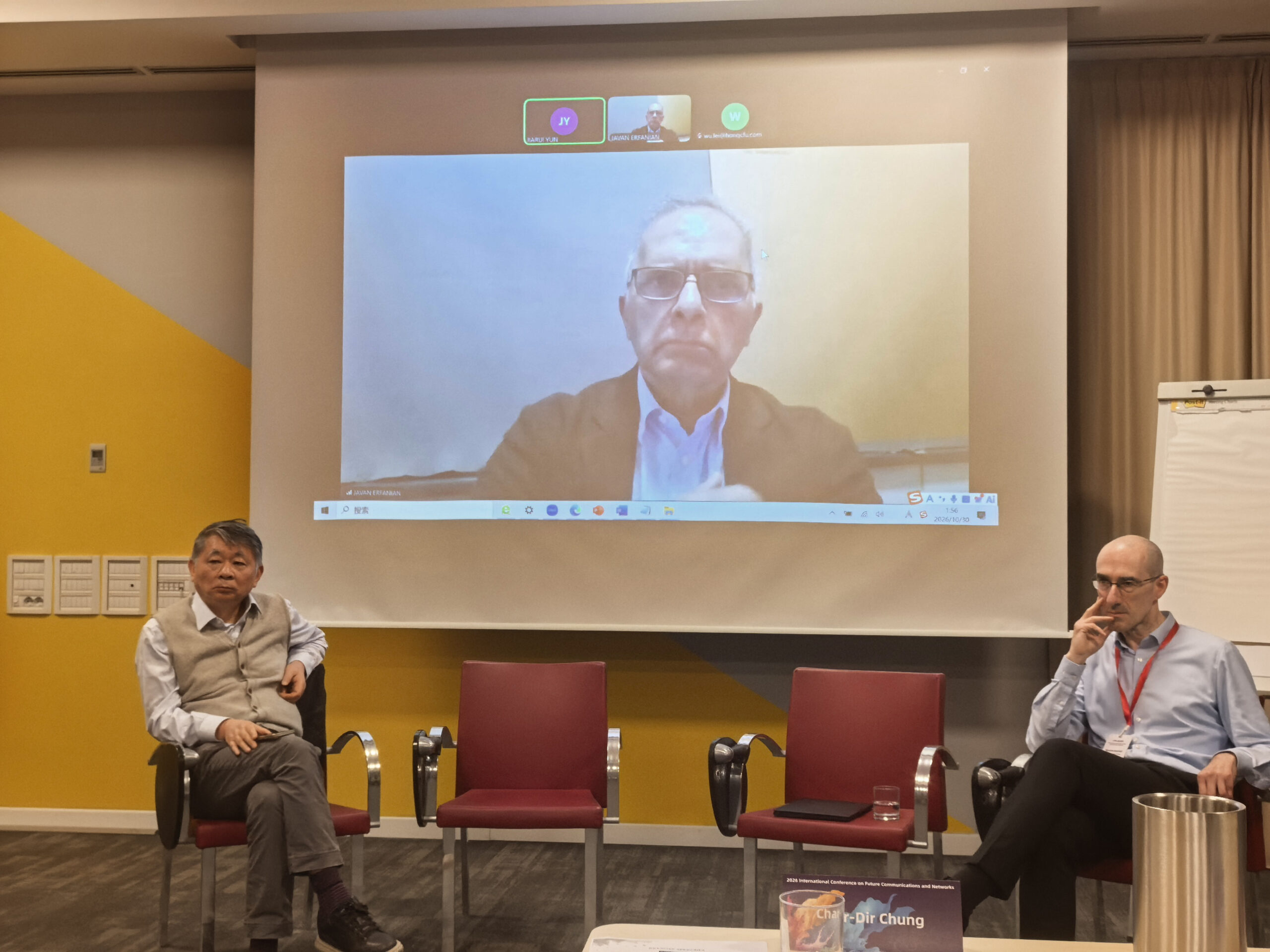
Geoffrey Li – Chair Professor, Imperial College London | Javan Erfanian – Senior Consultant, Veezhen; Senior Director of Strategy, GTI Alliance | Riccardo Guerzoni – Director of the Core Network Group, DOCOMO Euro-Labs; one6G Board member
Session focus
The IMT-2030 framework identifies AI and communication as a key 6G usage scenario, bringing together connectivity, computing and intelligence. Agentic AI takes this a step further. It enables systems to interpret user intent and system objectives, plan actions, invoke tools, and coordinate across multiple entities under operational constraints.
Today’s AI-assisted network optimization typically works within predefined functions, interfaces, and workflows. Agentic approaches point toward more flexible architectures, in which specialized agents dynamically coordinate tasks, negotiate resources, and compose capabilities. These architectures must still deliver the telco-grade performance, interoperability, security and service continuity expected of telecommunications infrastructure.
The architectural implications remain open. Agent-based coordination may complement existing service-based architectures, introduce new coordination mechanisms, or motivate broader architectural change. Weighing these options calls for evidence on their benefits, limitations and deployment costs. Throughout the session, the emphasis was on technically grounded architectures, communication-aware coordination and measurable system performance.
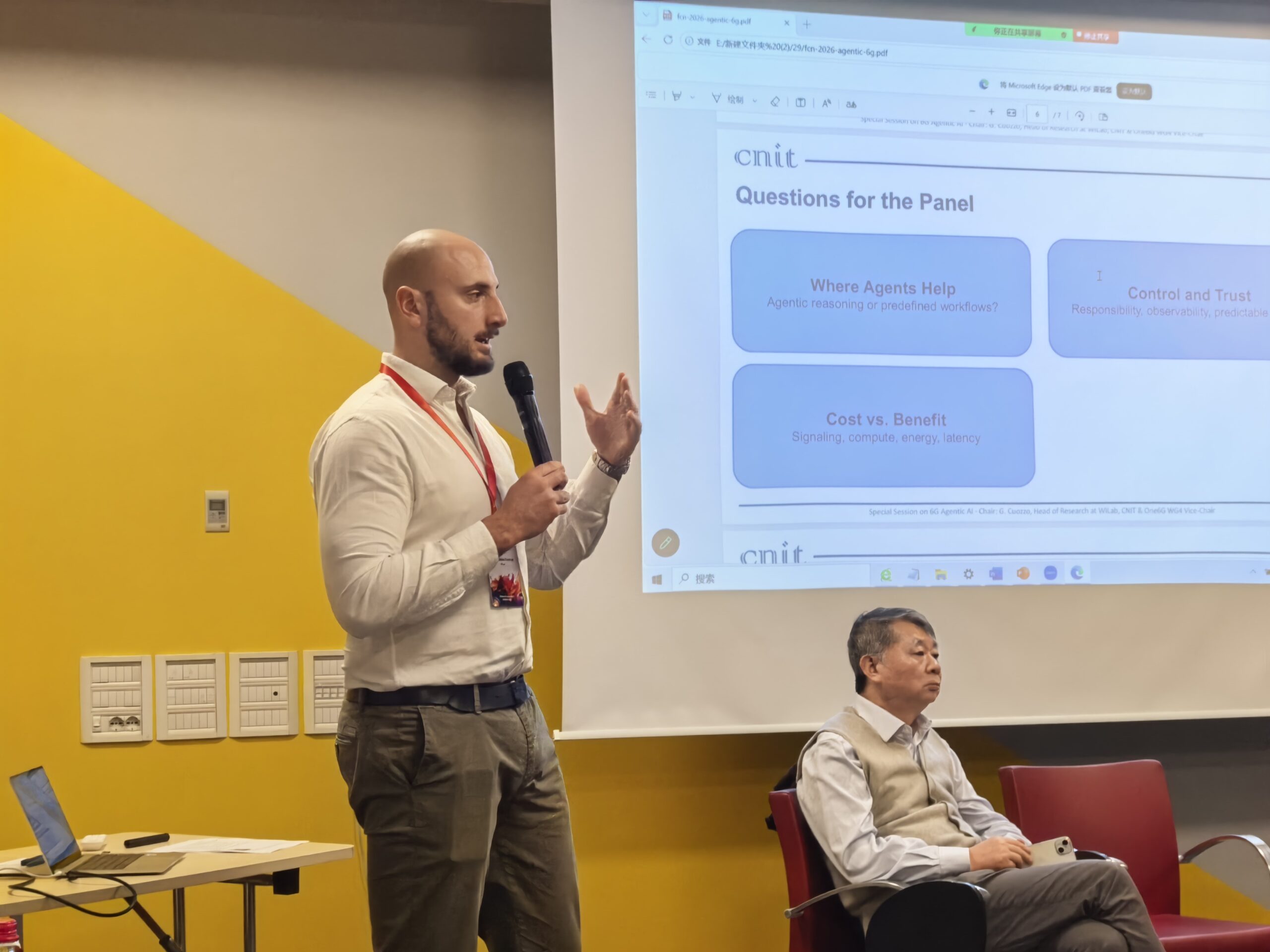
Giampaolo Cuozzo, Head of Research, National Laboratory of Wireless Communications (WiLab), CNIT
Speakers and format
Each invited speaker opened with a 10-minute talk setting out their perspective. A 40-minute moderated panel discussion followed.
The session was moderated by Giampaolo Cuozzo, Head of Research, National Laboratory of Wireless Communications (WiLab), CNIT, and featured the following speakers:
- Riccardo Guerzoni — Director of the Core Network Group, DOCOMO Euro-Labs; one6G Board member
- Javan Erfanian — Senior Consultant, Veezhen; Senior Director of Strategy, GTI Alliance
- Geoffrey Li — Chair Professor, Imperial College London
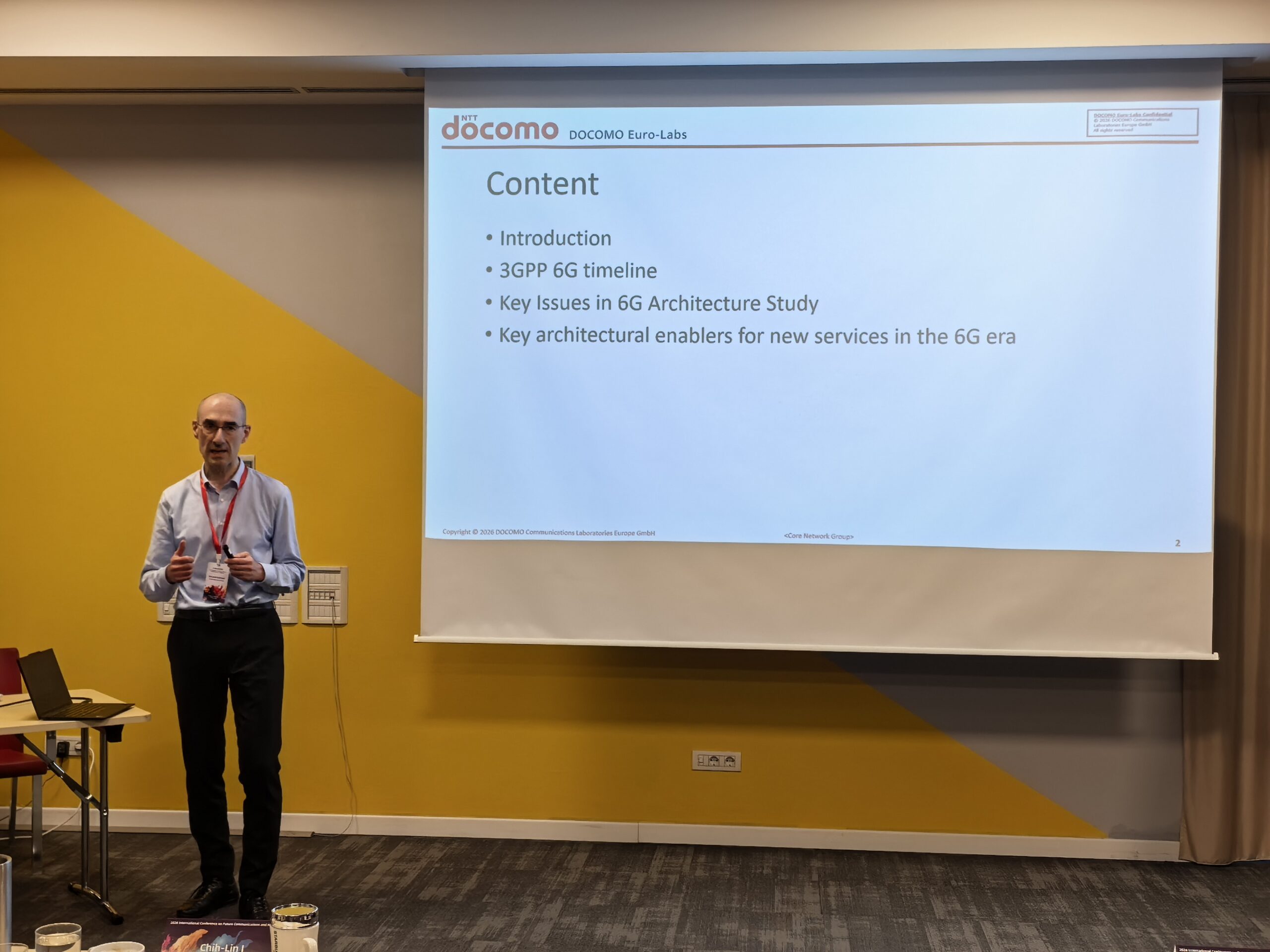
Riccardo Guerzoni – Director of the Core Network Group, DOCOMO Euro-Labs; one6G Board member
Discussion themes
The panel was structured around several open questions on the role of agentic AI in future mobile communication systems:
- Where agentic reasoning adds value: Which network tasks benefit from agentic reasoning, and which are better served by conventional algorithms or predefined workflows?
- Agents and network functions: How can agents interact with network functions while preserving clear responsibility, observability, and operational control? Could agentic AI-based mobile systems achieve recursive self-improvement in the long term?
- Predictable execution: How can probabilistic reasoning be constrained so that network actions are executed predictably?
- Distributed coordination: How can distributed agents resolve conflicting objectives and recover from inconsistent decisions?
- Cost versus benefit: What measurable improvements justify the additional signaling, computation, energy consumption, and implementation complexity?
- Energy and latency: How should energy efficiency and latency be addressed in AI-native 6G, including in collaborative distributed computing?
- Standardization: What is the current status of agentic AI in 6G standardization, and how is it expected to be addressed within 3GPP SA?
The session built on one6G’s ongoing work in this area, including the one6G WG2 white paper on Agentic AI and Foundation Models released at the one6G Summit 2026.