
IEEE CSCN 2026 Workshop Explores How 6G Can Empower Polyfunctional Robotics
On September 9, 2026, experts from across academia, industry, and the standardization community gathered at the IEEE Conference on Standards for Communications and Networking (IEEE CSCN 2026) in London for the workshop on “6G Empowering Polyfunctional Robotics.” Endorsed by the one6G Association and the euRobotics Connected Robotics Topic Group, the event brought together 25 key stakeholders to examine how emerging 6G capabilities can unlock the next generation of connected, intelligent, and autonomous robotic systems.
Co-chaired by Lina Mohjazi (University of Glasgow), Kaveh Ahmadi (PredWise Co.), and Mehmet Başaran (TurkCell), the workshop opened with an overview of the shared vision between one6G and euRobotics in driving joint activities at the intersection of wireless communication and robotics.
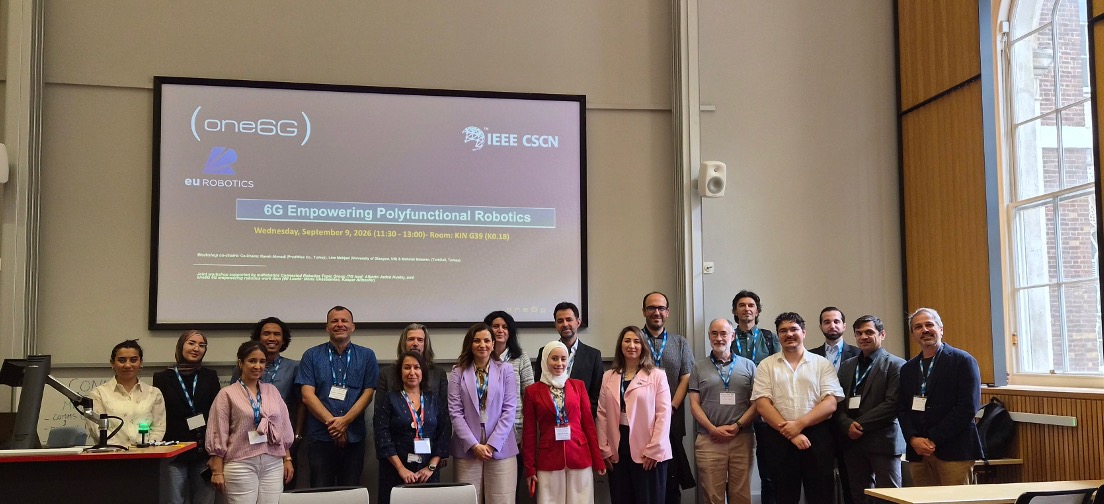
Workshop Group Photo
Keynotes and Technical Perspectives
The workshop featured two key presentations bridging futuristic use cases with standardization:
-
Healthcare & Ingestible Robotics: Kamran Sayrafian (NIST) delivered a keynote exploring advanced connectivity for specialized medical applications. Highlighting miniature and injectable robotic systems, the talk underscored the stringent communication and sensing requirements needed when robots operate inside or near the human body.
-
Standardization Pathways (IEEE P1955): Mona Ghassemian (eSense Ltd / King’s College London) presented an update on the ongoing IEEE P1955 standardization project (“6G Empowering Robotics”). Her presentation emphasized the critical need for common frameworks to ensure interoperability between wireless networks and robotic platforms as these systems mature toward commercial deployment.
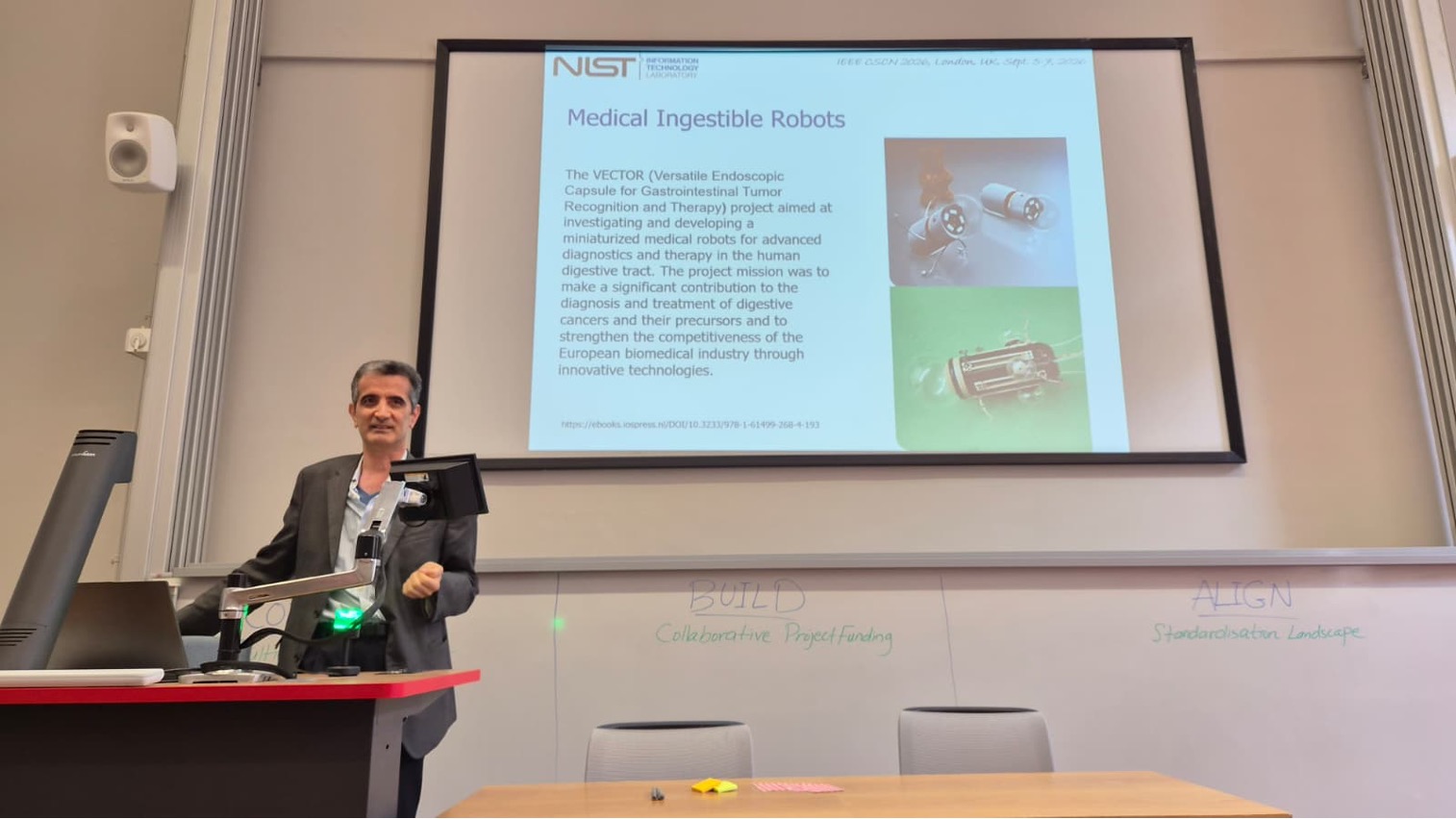
Workshop Keynote by Kamran Sayrafian
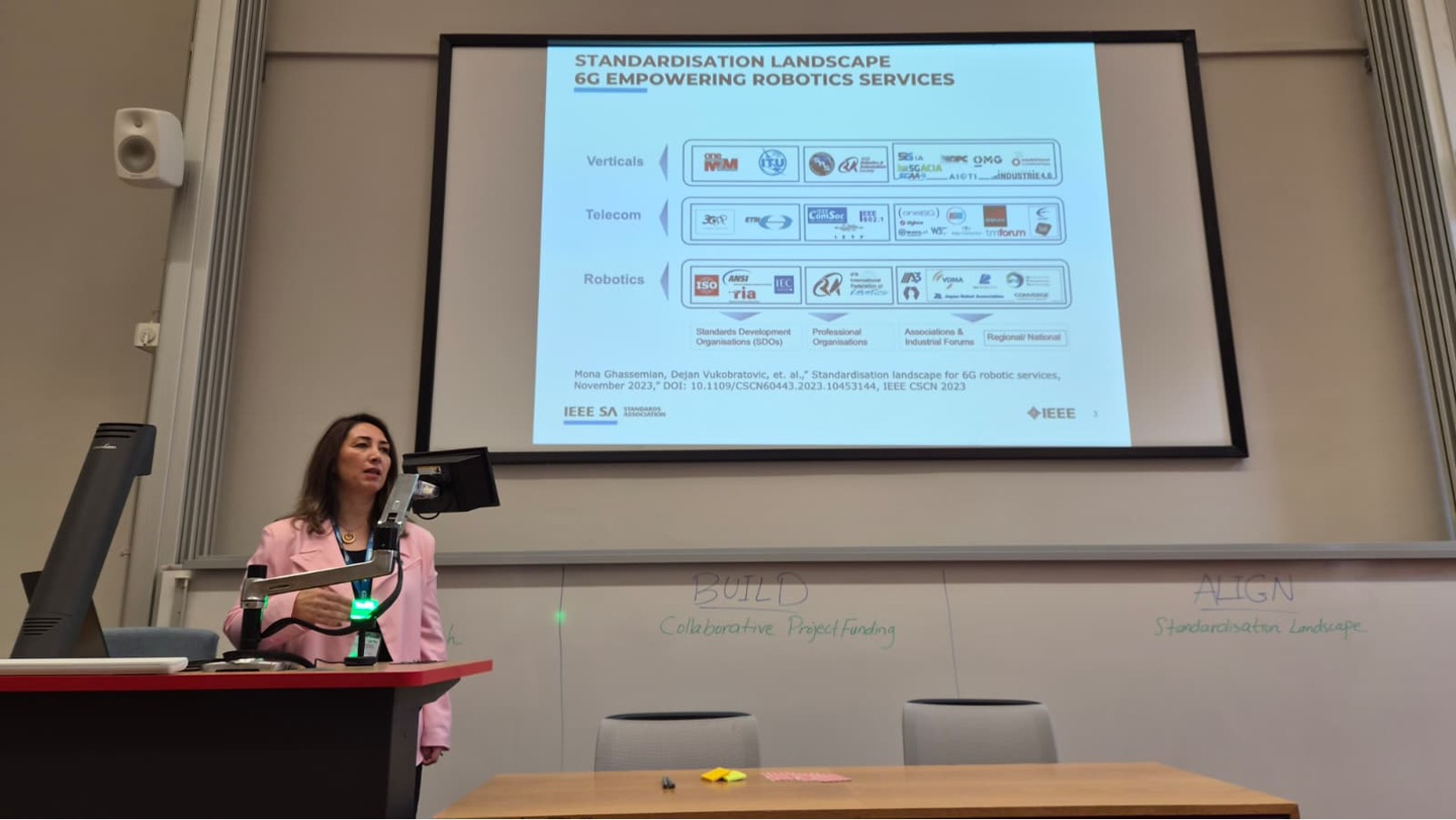
IEEEE P1955- 6G Empowering Robotics Standardisation Project Insights by Mona Ghassemian
Insights from Breakout Sessions
Facilitated by Lina Mohjazi and Toktam Mahmoodi (King’s College London), participants engaged in interactive sessions organized around three thematic areas:
CONNECT: Multidisciplinary Research
Led by Dejan Vukobratović (University of Novi Sad)
-
Common Language: Align definitions and methodologies across telecom, AI, and robotics domains.
-
Use-Case Driven: Research should begin from physical, real-world environments (e.g., healthcare, manufacturing, smart homes) rather than treating connectivity and AI as isolated layers.
-
Action: Establish joint testbeds and cross-domain initiatives to validate end-to-end performance across sensing, intelligence, and communication.
-
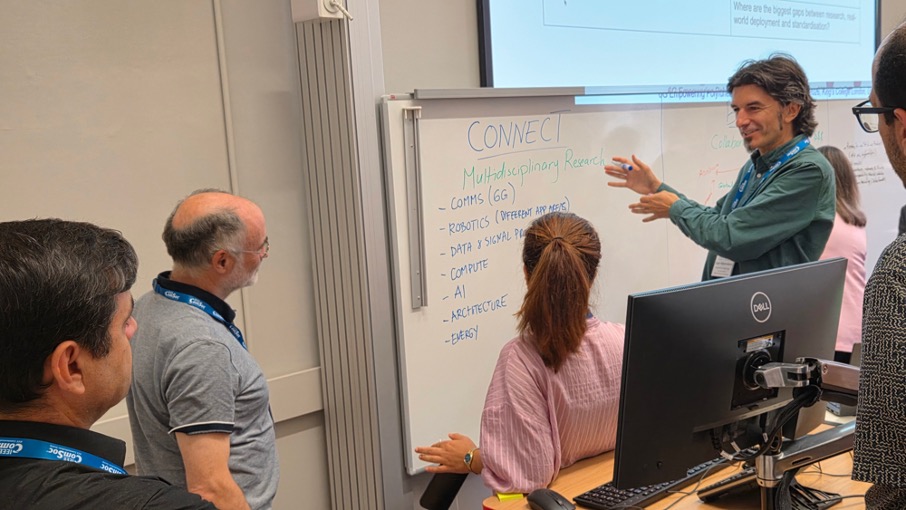
- CONNECT Breakout Session led by Dejan Vukobratović (University of Novi Sad)
-
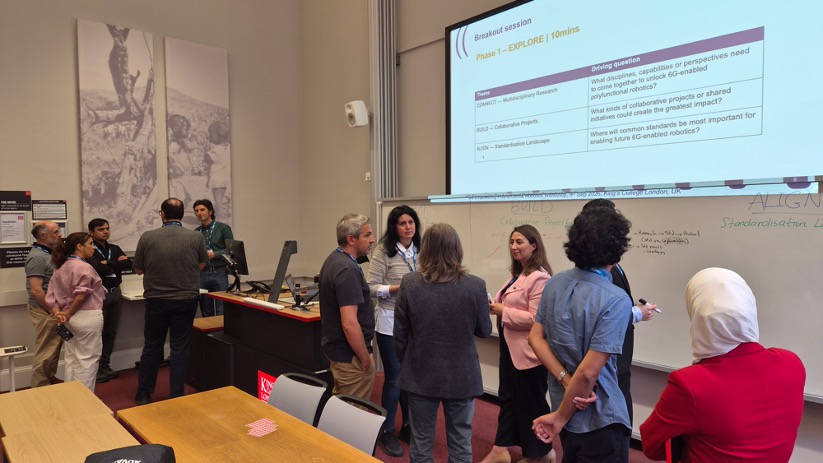
- Breakout sessions participants discussing in three different themes
-
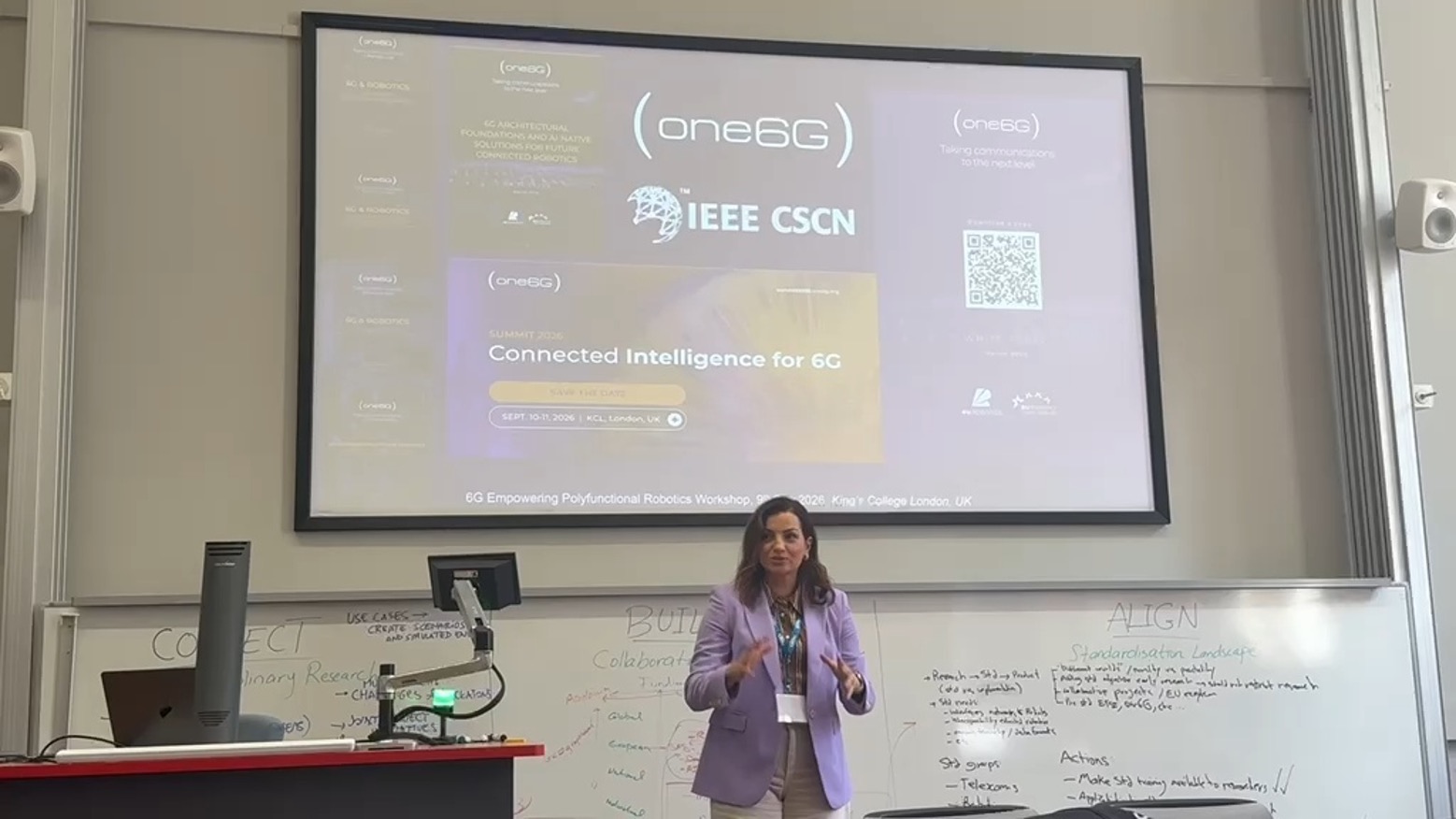
- one6G and euRobotics workshop chair Lina Mohjazi
BUILD: Collaborative Projects & Funding
Led by Nazlı Güney (Türk Telekom)
-
Dedicated Funding: Address the gap created by traditional funding silos by advocating for dedicated European and national funding calls specifically targeting Physical AI and connected robotics.
-
Strategic Roadmaps: Build community white papers and joint roadmaps to demonstrate the strategic value of 6G-enabled robotics to policymakers.
ALIGN: Standardization Landscape
Led by Arman Shojaeifard (InterDigital)
-
Bridging Timelines: Reconcile the long-term exploratory nature of academic research with the commercial feasibility and interoperability required by standards development organizations (SDOs).
-
Early Engagement: Involve SDOs earlier in the research lifecycle to streamline the pre-standardization pipeline.
-
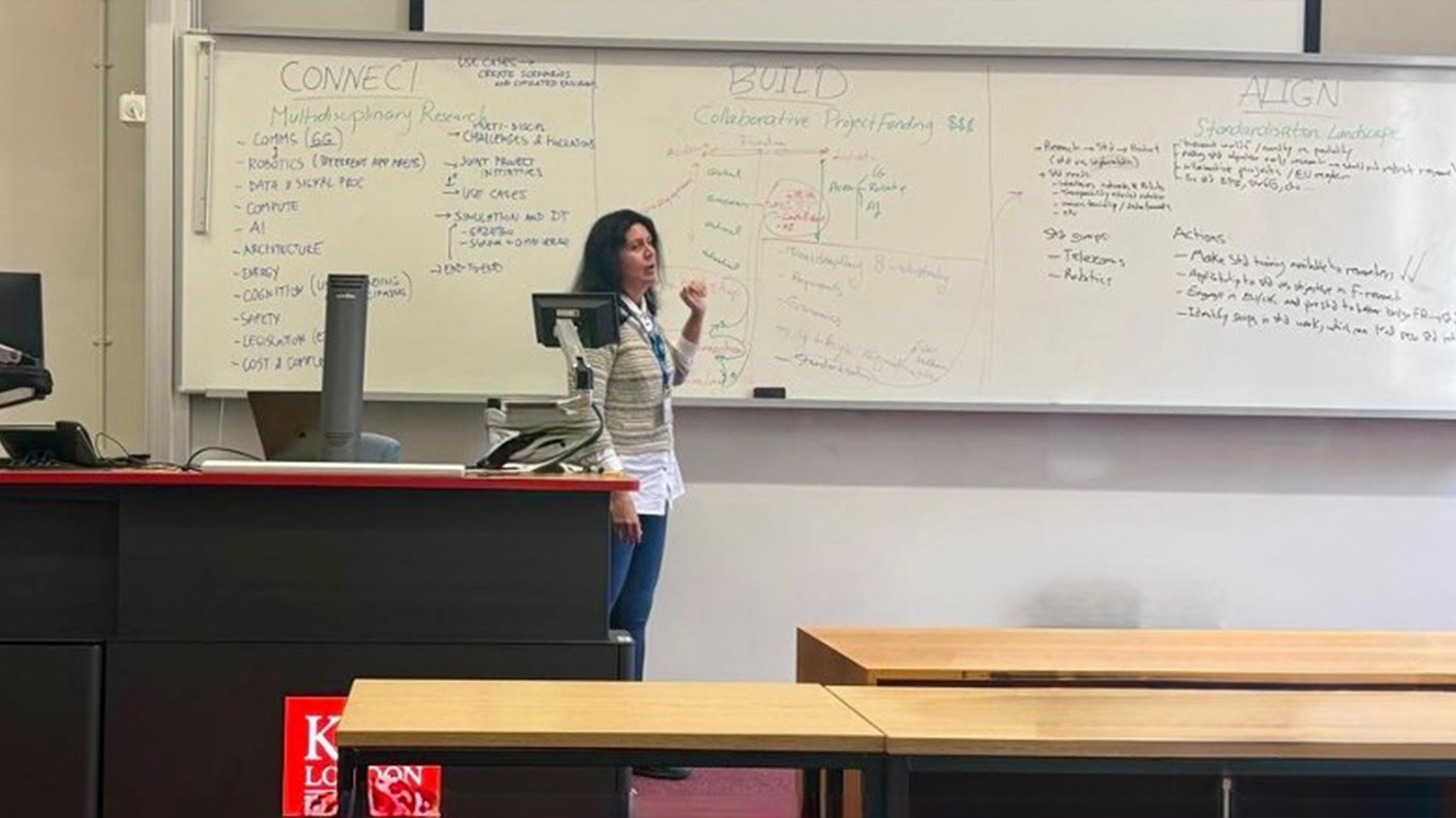
- BUILD-Breakout-Session-led-by-Nazlı-Güney (Türk-Telekom)
-
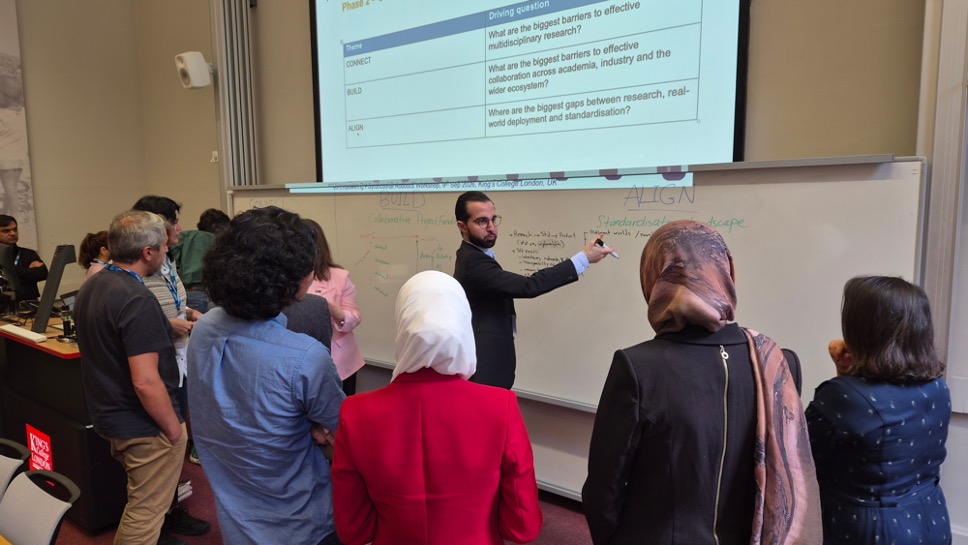
- ALIGN Breakout Session led by Arman Shojaeifard (InterDigital)
The Research-Funding-Standardization Continuum
A central finding across all sessions was the necessity of a continuous feedback loop linking Research ↔ Funding ↔ Standardization ↔ Deployment. Rather than viewing these as sequential steps, workshop delegates concluded that real-world deployment needs must continuously inform research agendas, while pre-standardization efforts provide the necessary vehicle for academic breakthroughs to achieve commercial scale.
Looking Ahead
The workshop demonstrated that realizing 6G-empowered robotics requires sustained cross-industry collaboration. The one6G Association and euRobotics invite members and the broader ecosystem to continue driving this effort forward through upcoming Working Group activities, a dedicated workshop at ERF 2027, and joint white-paper initiatives.